Applied Organic Chemistry Through Computational Molecular Modeling
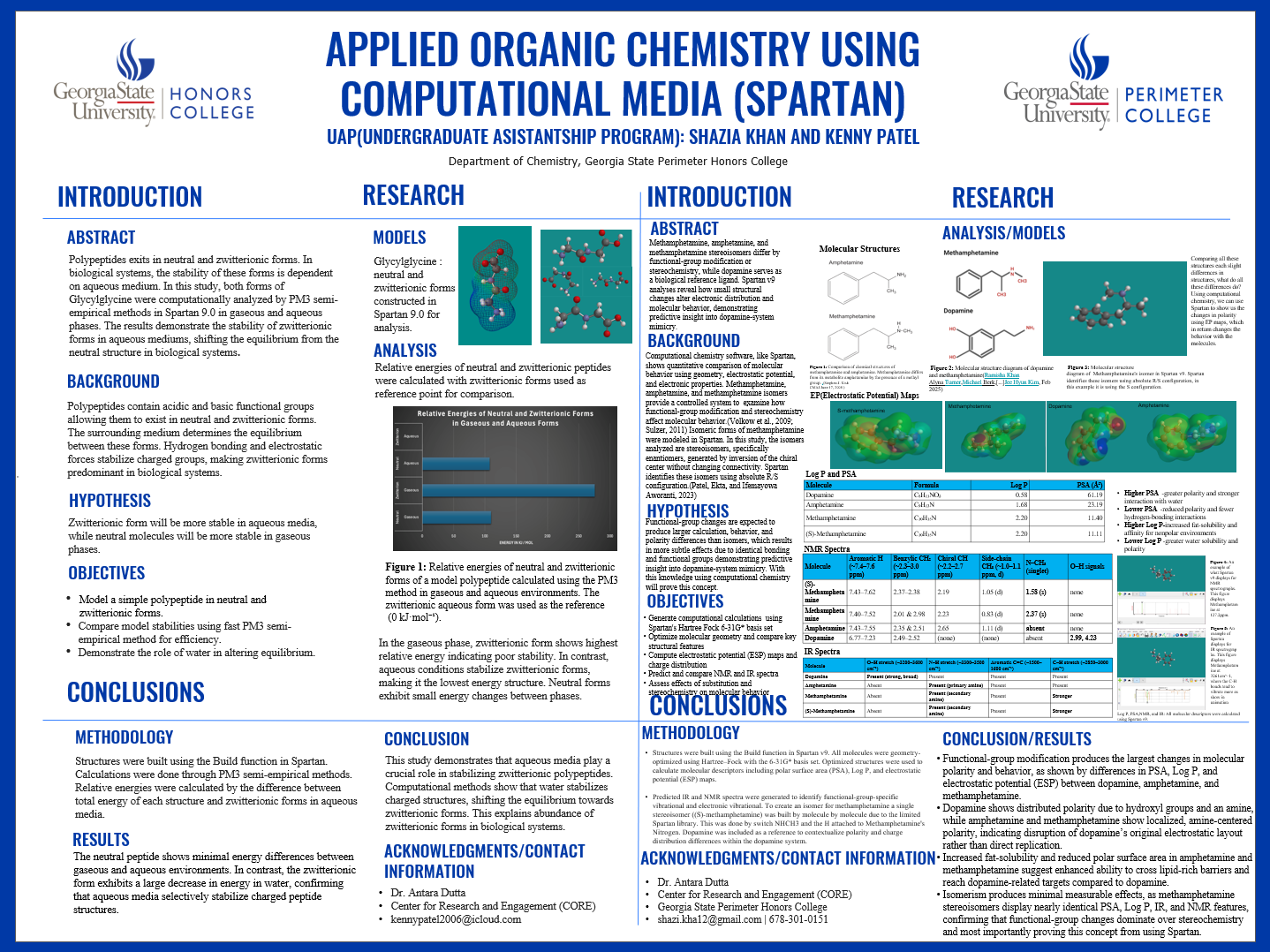
This project used SPARTAN computational modeling to study methamphetamine, amphetamine, and dopamine as part of an applied organic chemistry and medicinal chemistry analysis. My side of the poster focused on comparing molecular structures, electrostatic potential maps, IR spectra, NMR spectra, polar surface area, and Log P values to understand how small structural differences affect polarity, stability, fat solubility, and biological behavior.
Through this project, I analyzed how functional-group changes influence molecular properties. The results showed that dopamine has greater polarity because of its hydroxyl groups, while amphetamine and methamphetamine show more localized, amine-centered polarity and higher fat solubility. The project strengthened my understanding of medicinal chemistry, molecular modeling, spectroscopy, and structure-property relationships while showing how SPARTAN can be used to study real-world drug-like molecules and their chemical behavior.
Click Me!