Modeling and Measuring Light Intensity Using Arduino
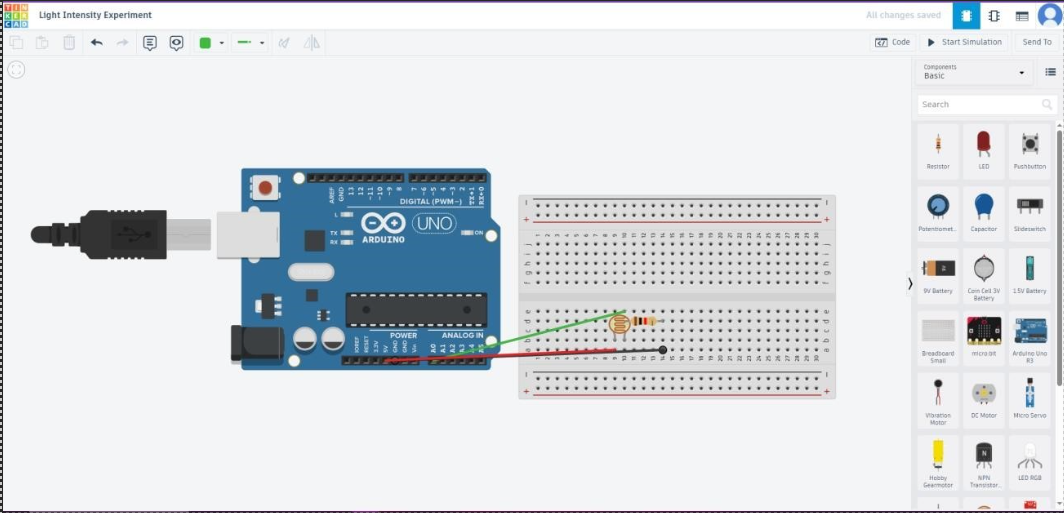
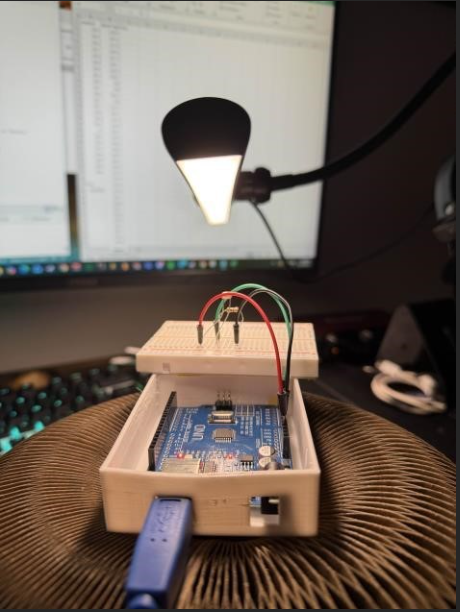
This project introduced me to the practical application of Arduino circuits and sensor-based data collection through an investigation of the inverse square law of light. My role in the project involved designing and simulating the circuit in TinkerCAD before physically constructing the setup using an Arduino Uno, breadboard, LDR sensor, resistor, and jumper wires. This process helped ensure that the circuit connections and voltage divider configuration functioned correctly before implementation.
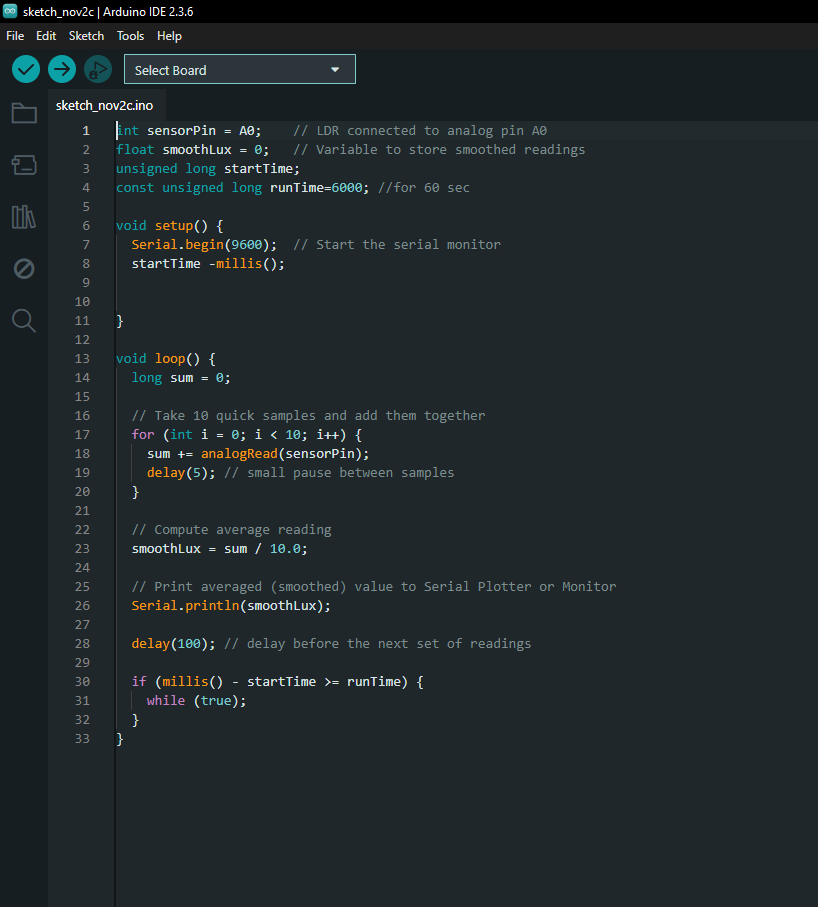
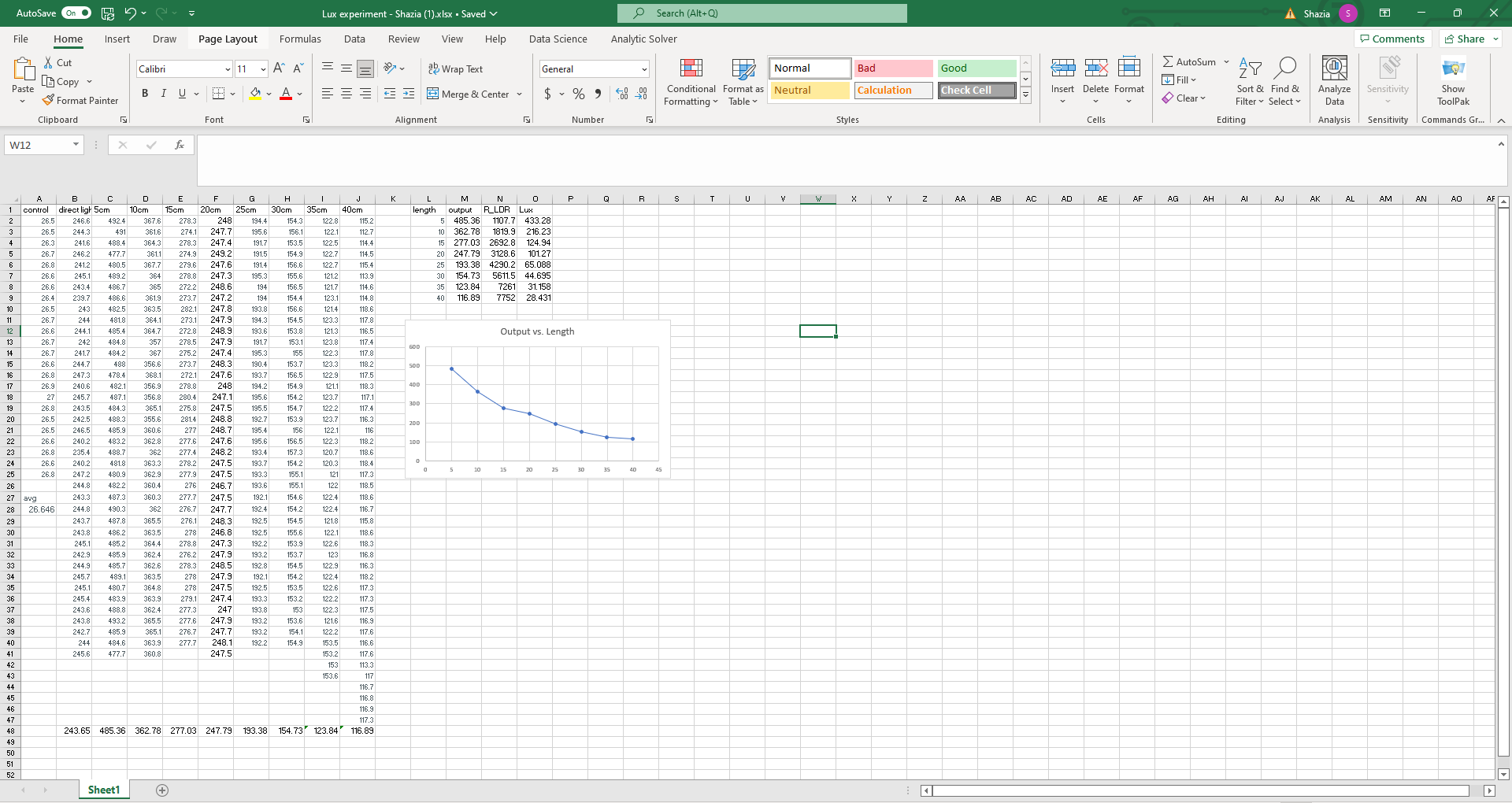
In addition to building the real-life Arduino setup, I was responsible for developing and troubleshooting the Arduino code used to collect and smooth the sensor readings. The code averaged multiple analog readings to reduce fluctuations caused by electrical noise and ambient light interference, producing more stable and reliable voltage data. I also handled the collection, organization, and analysis of the experimental data by exporting the Arduino readings into Excel, converting the analog outputs into voltage values, and graphing the relationship between light intensity and distance. Through this project, I strengthened my understanding of circuit design, sensor integration, coding logic, data analysis, and experimental troubleshooting, all of which are essential skills in engineering and prototyping applications.
Full Lab report can be seen through the link from clicking this image.